Arabic Speaking — Conversational Arabic Practice
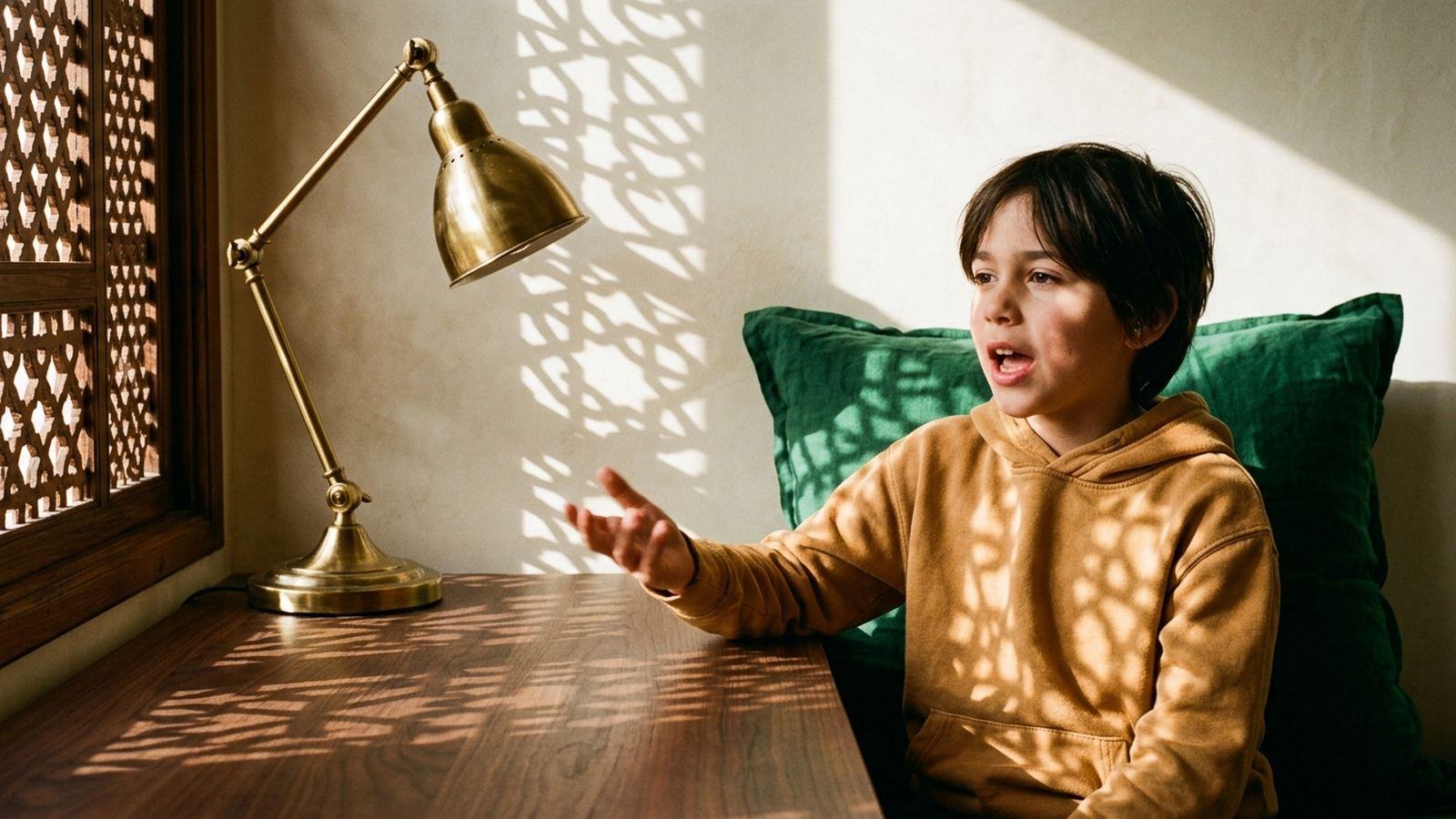
Speaking is a separate skill from reading, and it improves only with practice. Every class is built around talking: short dialogues, real situations, and immediate correction of pronunciation and phrasing.
Who it is for
Adults and teenagers who want to speak, including those living in or moving to the Gulf, students of Arabic, and spouses of Arabic speakers.
How long it takes
Basic conversation in about 3 to 4 months at two classes a week; comfortable everyday conversation in 8 to 12 months.
Course levels and entry requirements
Survival Arabic
You can join if: No Arabic needed.
Greetings, introductions, numbers, directions, shopping and ordering food.
Everyday conversation
You can join if: Handles greetings and simple questions.
Family, work, travel, health and appointments; past and future tenses in speech.
Fluency practice
You can join if: Holds a short conversation.
Opinions, storytelling, telephone conversations, and listening practice with regional accents.
What the student will be able to do
- Hold everyday conversations in Arabic with acceptable pronunciation
- Understand and use around 1,000 spoken words and common expressions
- Manage practical situations: travel, shopping, appointments, work introductions
- Understand the difference between Modern Standard Arabic and common dialects
What happens in a typical lesson
- Warm-up conversation in Arabic on a familiar topic
- New vocabulary and expressions for this week’s situation
- Role-play of that situation, repeated until it flows
- Pronunciation correction and listening practice
- Speaking task for the week, such as recording a short voice note
Which Arabic will I speak?
Lessons use Modern Standard Arabic as the base, with the everyday expressions of the region you need — Gulf, Levantine or Egyptian — added on request. Tell us where you will be speaking and the teacher adapts the vocabulary.
How progress is measured
- Spoken assessment in the free class to set the level
- Role-play checks at the end of each unit
- Monthly report on fluency, vocabulary and pronunciation
- End-of-level spoken test and certificate
What this course costs
The same monthly fee covers any course, so you pay for how often you study rather than which subject you choose. Billed monthly, cancel before the next billing date, no registration fee.
- 2 days a week — 8 lessons a month — £20 a month
- 3 days a week — 12 lessons a month — £28 a month
- 4 days a week — 16 lessons a month — £35 a month
- 5 days a week — 20 lessons a month — £42 a month
- The first lesson is a free level assessment. No card details are taken.
Common questions
Can I take this without reading Arabic?
Yes, though reading makes progress faster. Many students take Arabic Language and Arabic Speaking together.
Do you teach children?
Yes, from about age 10, when role-play and conversation practice work well.
Can I learn to speak Arabic online if I only know Quranic Arabic?
Yes, and you are starting well ahead on vocabulary. What the course adds is the everyday forms, the pronunciation habits of ordinary speech, and the confidence to answer without composing the sentence first.
Which dialect do you teach in online spoken Arabic classes?
Modern Standard Arabic as the base, which is understood everywhere, with the teacher introducing the forms of their own region where they differ. Tell us if you need a particular dialect — for family, for work or for travel — and we will match you with a teacher who speaks it.
How are conversational Arabic lessons structured?
Mostly you talking. Each lesson has a situation — ordering, directions, a phone call, meeting family — and the teacher corrects as you go rather than lecturing on grammar. Grammar is explained when a mistake makes it necessary.
Can children take spoken Arabic classes online?
Yes, and children pick up pronunciation faster than adults do. Lessons for younger children are shorter and built around games, naming things and simple back-and-forth rather than written exercises.