Hifz-ul-Quran — Structured Memorisation Programme
Memorisation succeeds or fails on revision. Every student follows the traditional routine — sabaq (new lesson), sabqi (recent revision) and manzil (long-term revision) — with the teacher recording every page and scheduling revision so that what is memorised stays memorised.
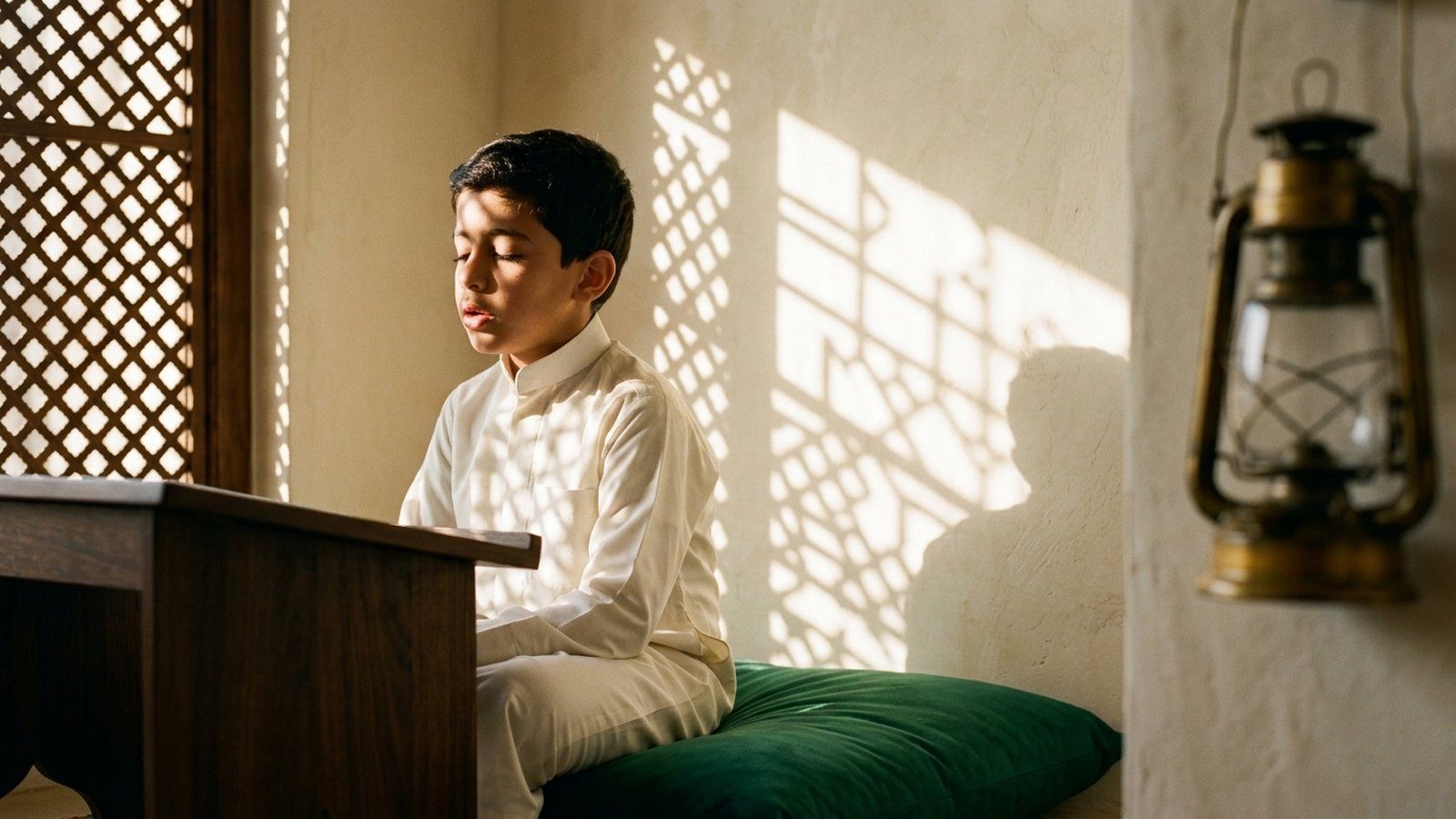
Who it is for
Students who read fluently with basic Tajweed. Children from about age 7, teenagers, and adults memorising part-time.
How long it takes
Juz Amma typically takes 6 to 12 months part-time. Full Quran timelines depend on daily capacity and are planned individually after the assessment.
Course levels and entry requirements
Entry — Readiness check
You can join if: Reads a page of the mushaf fluently.
Reading assessment; if fluency or Tajweed is weak, the teacher recommends Tajweed first rather than starting Hifz.
Stage 1 — Short surahs
You can join if: Passed the readiness check.
Surahs from Juz Amma, building the daily sabaq, sabqi and manzil habit.
Stage 2 — Juz by juz
You can join if: Holds Juz Amma with revision.
A structured page-a-day or line-a-day plan, with weekly revision targets.
Stage 3 — Consolidation
You can join if: Several juz memorised.
Full-Quran revision cycles, reciting from memory to the teacher, and preparation for reciting in Taraweeh or for Ijazah.
What the student will be able to do
- Memorise new portions daily with correct Tajweed rather than approximate sound
- Hold a written revision schedule that prevents forgetting earlier portions
- Recite memorised portions to the teacher without prompting
- Track exactly which pages are secure, weak, or due for revision
- Reach a stated target — Juz Amma, selected surahs, or the full Quran — on a realistic plan
What happens in a typical lesson
- Manzil: a portion of older memorisation recited from memory
- Sabqi: recent pages recited to check retention
- Sabaq: the new portion read with the teacher, then memorised line by line
- Teacher marks the day’s record: pages, errors, and what is due tomorrow
- Homework target set for the next class, sized to what the student can hold
Important Surahs course for families not doing full Hifz
Many families want their child to memorise the surahs used daily — Al-Fatiha, the last ten surahs, Ayat al-Kursi, Surah Yaseen, Surah Al-Mulk, Surah Al-Kahf — with correct pronunciation and an understanding of the meaning. This runs as a shorter programme with the same revision discipline as full Hifz.
Part-time and full-time routes
- Part-time: one class a day around school, with a realistic weekly target
- Full-time: longer daily sessions for students able to commit the hours
- Adult Hifz: shorter daily portions with heavier revision, planned around work
Why the plan is set to the student, not the calendar
A student who memorises a page a day but revises nothing loses it within weeks. Teachers set a daily amount the student can genuinely retain, and increase it only when revision stays clean. Progress is measured in pages held, not pages passed.
How progress is measured
- Readiness assessment before enrolment, with an honest recommendation if Tajweed comes first
- Daily check of sabaq, sabqi and manzil in every class
- Weekly consolidation test of the week’s pages
- Monthly report: pages memorised, revision completed, weak pages flagged
- Certificate for each juz completed and revised to standard
What this course costs
The same monthly fee covers any course, so you pay for how often you study rather than which subject you choose. Billed monthly, cancel before the next billing date, no registration fee.
- 2 days a week — 8 lessons a month — £20 a month
- 3 days a week — 12 lessons a month — £28 a month
- 4 days a week — 16 lessons a month — £35 a month
- 5 days a week — 20 lessons a month — £42 a month
- The first lesson is a free level assessment. No card details are taken.
Common questions
Can my child memorise the Quran online?
Yes. One-to-one classes suit Hifz because the teacher hears every word. Daily consistency at home matters more than the format.
What if my child forgets earlier surahs?
That is expected, and it is what manzil revision is for. Revision is part of every lesson, not an extra.
Should my child finish Tajweed before Hifz?
They should read fluently and apply the core rules. Otherwise mistakes get memorised along with the words, and correcting them later is much harder.
How do online Hifz classes work day to day?
Three parts every lesson: sabaq, the new portion; sabqi, what you memorised recently; and manzil, older portions on rotation. The teacher hears all three, so nothing quietly slips. The portal records exactly which lines were heard on which day.
Can I memorise the Quran online while working or at school full time?
Many of our students do. The question is not hours available but hours at the same time each day. Half a page a day, heard by a teacher five days a week, is a realistic pace alongside school or a job; a page a day is possible for students with a free morning.
What age should a child start online Quran memorisation?
Usually seven or eight, once reading is fluent enough that memorising is not slowed by decoding. Starting Hifz before reading is solid builds errors into memory, which is far harder to repair than to prevent.
How long does it take to memorise the whole Quran?
At half a page a day with revision, three to five years is the honest range. At a page a day with a free morning, two to three. The number people quote is always the memorising; the time is really in the revision.
What happens to what I have memorised if I take a break?
It fades, which is why manzil revision is in every lesson rather than left to the student. If you stop for a term, the teacher restarts with revision of existing portions before any new sabaq.